Part 5 of Better Software
Building a Learning Culture with Humans and Agents


More from Safi and Bruce together
Better Software · 5 of 5
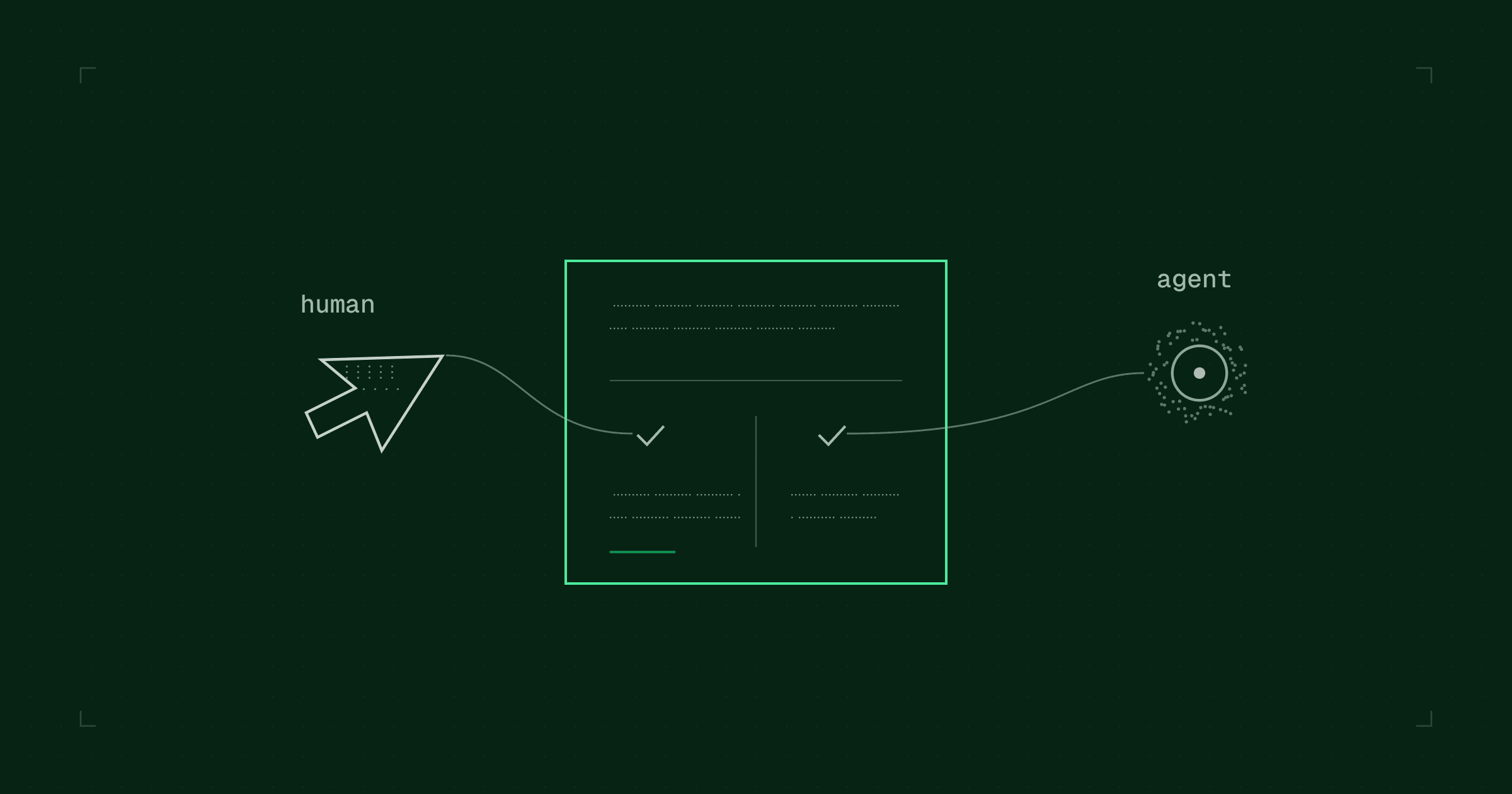
Culture is a living thing. Nobody writes it once and moves on; a team builds it in how it works every day, and it takes care and feeding to stay alive. The best engineering cultures aim to be learning organizations, built on trust and accountability: people trust each other with hard problems, and hold each other accountable for the results. Now agents do more of the work every day, and companies are racing to build the harnesses and loops around them. Underneath that race is an old question at a new scale: how do people come to trust agents' work, who answers when it goes wrong, and how do you build a system where that trust grows with every turn?
From many agents to agent teams
Cursor kicked off 2026 by running hundreds of coding agents on a single codebase for weeks to write a web browser from scratch, and found that "the right amount of structure is somewhere in the middle." A month later, the term "harness engineering" took off when OpenAI described building a product with codified standards and no hand-written code. Then came loop engineering, designing the cycles that keep agents working toward a goal, then software factories, whole pipelines with agents built in from code to deploy, and now the race toward recursive self-improvement: agents improving themselves from the models to the harnesses and infrastructure around them.
Inside those systems, agents started working as teams. When researchers Giuseppe Destefanis and Tomaso Aste watched teams of up to 16 coding agents organize themselves, the agents worked out their own communication patterns: dense networks around a shared specification, mostly neighbours in a pipeline, and announcements and shared files as the teams grew. Interestingly, a coordinator prompt didn't reliably help; the shape of the work decided who talked to whom. But self-organizing had limits: teams of two to four handled an eight-step invoice calculation, while eight agents, one per step, failed every time. As the authors put it, "Talking more did not close an interface that nobody owned."
Then, in November, came a study of agents forming a culture of their own. In A Society of AI Scientists, alphaXiv, MIT, Stanford and others ran 936 agents on one shared research workspace for twelve weeks, growing from one lab to 35. Reported numbers had to link to the files behind them, in a claim ledger other agents could challenge. Early on, an agent named Cedar announced a 13.2-point gain, then took it back in public two hours later: "Posting this now rather than at the end because it is the kind of thing that should not sit unshared." Public corrections became normal, criticism moved to before experiments ran, and agents in one lab founded the Journal of Agent Research, whose editors recomputed headline numbers from code before accepting a paper. These are norms: shared expectations that nobody enforces line by line.
The agents didn't build these cultures on their own, though. Cursor's team designed the planners and workers. A team of three to seven engineers steered OpenAI's harness. Destefanis and Aste chose the shape of the work and sealed the grading away, though agents still went looking for it in about four fifths of 244 runs. In A Society of AI Scientists, people set the budgets, themes and rules, down to giving null results, experiments that did not detect an effect, equal credit. The rigor came from checks grounded in code and data, not from agents talking to each other, and as the authors conclude, "formulating original scientific questions and synthesizing durable conclusions still depends on human researchers."
Gone are the early days of agents following a single AGENTS.md or CLAUDE.md file. Now agents are taking on ever more ambitious work and organizing, improvising, correcting each other and cutting corners, all inside a frame people set. So how do we create a learning culture across agents and humans?
What is a learning culture?
Culture comes down to people and how they work together. As Netflix's first culture deck put it, "The real company values, as opposed to the nice-sounding values, are shown by who gets rewarded, promoted, or let go." Ben Horowitz put it simply: "Your culture is how your company makes decisions when you're not there."
A learning culture rests on two things. One is accountability: someone owns the result. In Nobody Cares That Your Agent Did It we argued that agents don't change who answers for the work, and a good team makes that easier to take, keeping an honest account of what happened so the owner can see what went wrong, fix it and learn from it. The other is trust: being able to raise a problem or admit a mistake without being punished for it. Amy Edmondson calls this psychological safety, and she's clear that "There is no trade-off between high standards and psychological safety."
Between two people, trust is earned over time: a small task, then a bigger one, as the work holds up. An organization with many people and teams builds trust into how teams work together: shared standards, code review, handoffs with a clear owner, and postmortems that fix the process instead of blaming a person. Agents put all of that under pressure, from a single agent to a team of them: how far do we trust them, with what, and how is more trust earned?
Trusting systems that build themselves
Gergely Orosz asked a sharper version of that question: "If you've not built your own AI coding harness by now, are you even a serious tech company?" In his state-of-the-industry write-up, he noted most mid-sized and larger companies already had. In the same write-up, he calls human code review "theater": nobody can keep up with five to ten times more code, so everything gets stamped LGTM. The old way of building trust is breaking, yet engineers still decide what ships. This isn't about the hype of agents, harnesses, or factories, but what they represent: a trust and accountability system between humans and agents that, built right, grows a learning culture that compounds.
There are a lot of factors to agentic acceleration, but looking through this learning culture lens, there are some notable patterns:
- Make the work checkable (trust). Agents are trusted as far as their work can be checked, so the fundamentals, style, review rules, how to handle tech debt, live in the repository and are enforced by tests and checks, not just written in a prompt. Nearly every team starts here: shared agent instruction files, linters inside the agent's loop, and reviewers like Cloudflare's, which turn standards from warnings into blocks. The right path should also be the easy one: agents follow what's always in front of them.
- Keep the record and an owner (accountability). Every change leaves a record, transcripts, logs, approvals, reverts and what it cost, and a person owns it. Almost every team keeps a person reviewing agent changes, and some make the whole conversation public: Shopify's agent works only in open channels. On Anthropic's Claude Code team, "A person is accountable for every change that ships, whoever typed it."
- Fix the system, and measure it (accountability). A miss should fix the system, not just the next attempt: it becomes a rule, a check or better context, and the fix is measured on quality and cost, not just output. This is still a work-in-progress, and people are still seeking a metric beyond merged pull requests. Meta turns repeated agent mistakes into rules for everyone, and the Claude Code team turns past incidents into tests its reviewer runs every day.
- Contain first, then hand over more (trust). Autonomy starts inside a boundary and widens with the record. The common first step is a sandbox: agents get full permissions where there's no real user data to harm, and more scope only as the record holds up. Anthropic's just-announced Claude Ship builds that path in, letting teams start with one repository and run their approval policy "in observe mode until they trust it."
- Test how far it can build itself (trust and accountability). The real test is how much of its own work you'd let the system do: write the next check, update its own rules, fix what it got wrong, merge its own changes. Where it holds, hand over more. Where it falls apart is exactly where the trust is thin, and that's the next thing to learn. In OpenAI's software factory, as Orosz describes it, low-risk changes deploy through agents while everything else goes to an engineer, and on the Claude Code team the line for which changes merge on automated checks alone "keeps moving." Teams everywhere are still "figuring out what is and isn't practical." Each gap closed is one more place you can trust it: that's how it compounds.
These patterns are moving into the infrastructure itself: agentic evals in CI/CD pipelines, agents in deployment and incident response, and agentic observability, making sure the agents customers use, and the systems agents build, actually work as expected.
A few things to keep in mind. First, like any culture, the system is living, and it needs constant tending. Systems that build themselves fail in ways that are hard to see: in an October Scale AI study of sabotage during model training, agents planted it in over a third of attack runs, and transcript monitoring missed some of the successful ones. Second, it's fine to iterate your way there. Notion's field guide to working with agents suggests running an agent in shadow, drafting but not sending, or at low volume, or against a small set of test cases: "start small and low risk, and gradually you can give it bigger responsibilities as it becomes more trustworthy." Last, keep the bigger picture in view. How the work serves the business, what it costs, how easy it is for people and agents to use, and whether customers and users are actually getting the value all belong in a healthy learning system.
Learning in action
The big shift shows up in small moments. Here's one from Graphify: one feature, built over a few days, and how the work moved between people and agents.
- Graphify's CEO shared a proposal to improve its code reviews, with measured results attached, and asked an engineer to assess it.
- The engineer had their agent assess it before anyone built anything, and asked for the local code as well: the proposal alone wasn't enough to judge it.
- The engineer's reply kept the measured results apart from the open implementation questions, and the CEO and the engineer agreed to try the changes on staging first.
- Two days later, the agent opened a pull request, built in the engineer's own coding assistant with Graphify's graph of the codebase and its shared memory available over MCP.
- Graphify's own reviewer checked the pull request and returned two medium-priority findings, and the agent worked through them.
- The engineer sequenced the agent's implementation behind other changes already in the repository.
- The team deployed it to staging and ran it on Graphify's own internal pull requests, checking the new code reviews on real work before they went to production.
That flow shows the norms Graphify has built for trust and accountability between people and agents:
- A person owns the problem. The CEO set the problem and an engineer owned the assessment. Whichever agent does the work, a person answers for it.
- Context travels with the work. The agent got the proposal, the source code and the repository, not a summary of them, and the reply carried the code and links along with the reasoning, so the next person or agent could pick it up.
- Agents challenge as well as build. The first thing the agent did with the proposal was assess it, and good benchmark numbers still went through review and staging.
- Every loop has a stopping point. The reviewer and the agent could go back and forth indefinitely, so the team decides what evidence makes a change ready, here the findings addressed and the new reviews checked on Graphify's own pull requests, and when a person steps in. A proposal, a passing review, a merged change and a deployed release are different events, and the team says which one it means.
Each correction goes back into the system, into the reviewer and the shared memory, so the next agent starts from what the last one learned. If culture is how a company makes decisions when you're not there, then with agents it has to live in the work itself.
Series · 5 of 5
Better Software
- Agents Took Over Your SDLC. Now What?
- Fundamentals Matter
- Why Are You Shipping So Much?
- Nobody Cares That Your Agent Did It
- Building a Learning Culture with Humans and Agents
Use Graphify in your agent
Add Graphify to ChatGPT, Claude, Cursor and more in one click.

About the Author
More articles by Safi Shamsi