

Greptile alternatives for AI code review
9 minute read

The best Greptile alternatives for AI code review are the tools that change what the reviewer can see, and whether your agents can query the same picture of the code. Graphify is the alternative we would start with: it reviews a pull request against a code graph of the repository, and that same graph is there for Claude Code, Cursor, Codex and other MCP clients. This post compares Graphify with Greptile, CodeRabbit and Qodo. We make Graphify. Every claim about another product links to that product's own docs, read on 26 November 2026.
If you already use Greptile and want a move plan, start with migrating from Greptile. This page is the alternatives list, not a second copy of that guide. A broader reviewer list, including Copilot, Codex, Cursor Bugbot and Claude Code, is in AI code review tools.
What does Greptile do well?
Greptile is an AI code review agent. You connect a repository, it builds a graph of the codebase, and it reviews pull requests automatically. Its graph-based context docs, read on 26 November 2026, say the graph records files, functions, classes, imports and calls, and that a review of a changed function can see callers, similar patterns and impact in other files. You can also add related repositories as cross repo context, according to the key features page.
Reviews typically post a summary and inline comments in about three minutes, with a confidence score from 0 to 5 and suggested fixes. A Fix with your Agent button can send a finding, with file paths, line numbers and suggested code, to Claude Code, Codex, Conductor, Cursor or Devin. A Fix All button in the summary can send every issue at once. TREX can start the app in a sandbox, click through the flows the change affects, and post a recording on the pull request.
Greptile also documents an MCP server at https://api.greptile.com/mcp. Agents can fetch review comments, apply suggested fixes, read a knowledge base for an enrolled repository and manage coding patterns. That MCP is built around review data. It is not the same job as querying a persistent code graph for callers and impact while you write code.
Thumbs up and down, and short replies, teach Greptile what to keep commenting on. After a few weeks, the docs say it stops commenting on things the team does not care about.
Why are teams looking at Greptile alternatives?
Two reasons come up most, and they are the same ones we walked through in why teams are migrating from Greptile: what the reviewer catches, and how the bill behaves when coding agents start opening most of the pull requests.
Greptile bills in credits per completed review. That is easy to reason about when people open the pull requests. It gets harder when agents do, because the bill then grows with your own automation. Founders have been asking about it in public. On 23 November 2026, Sara Du (@saradu) posted:
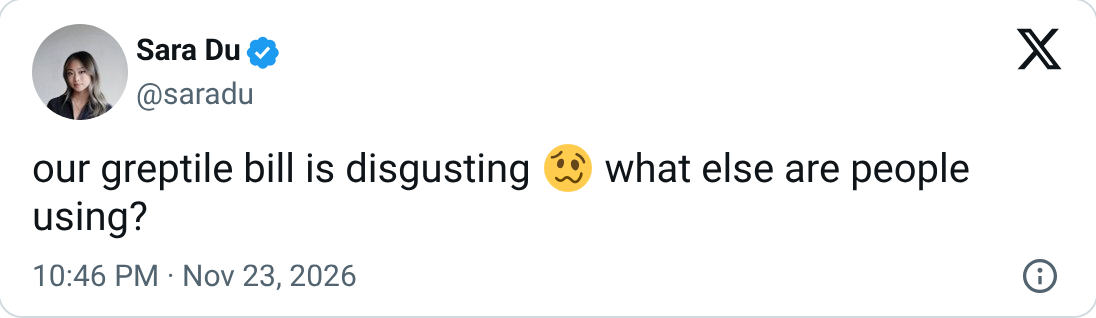
our greptile bill is disgusting 🥴 what else are people using?
Parcha later published what that looked like on its own team. After its agents took off, the review bill grew sharply, and it built its own reviewer instead. Most teams do not want to build and maintain a reviewer. They want review that stays predictable as agent volume goes up.
Catch rate is the other reason. On Graphify's code review benchmark, Graphify caught 71% of real bugs, against 56% for Greptile re-scored with the same rule. Results vary by codebase, which is why the migration guide has a side by side week built in. If you are already on Greptile, start there. This page stays the alternatives list.
Some teams also bounce off the comments themselves. On 3 January 2026, @sacino wrote:
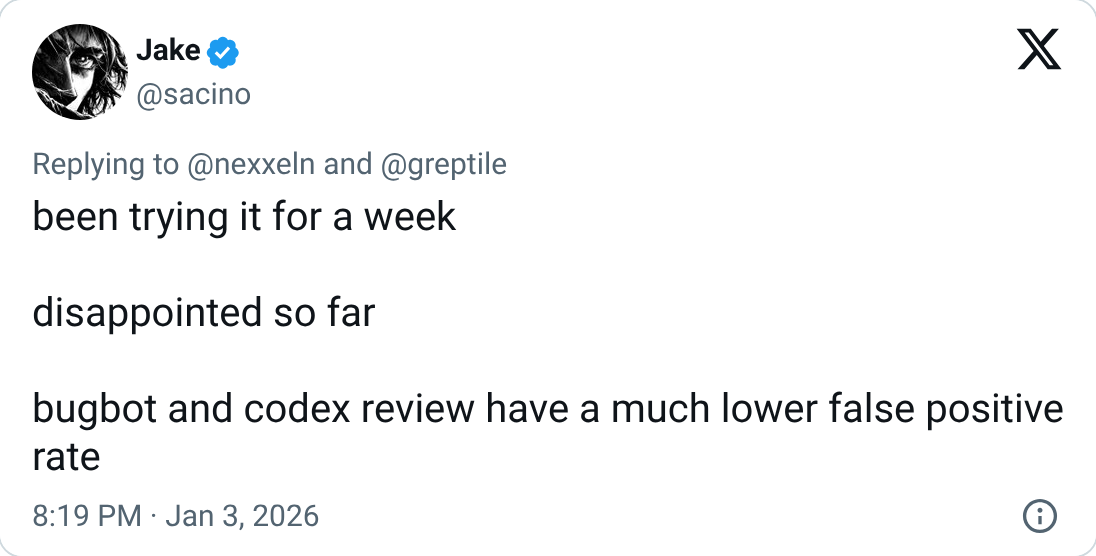
been trying it for a week
disappointed so far
bugbot and codex review have a much lower false positive rate
That is one person's week, not a benchmark. It is still a fair reason to run two reviewers on the same pull requests before you switch.
Greptile alternatives at a glance
| Tool | What the review can see | What agents can query | Local option |
|---|---|---|---|
| Graphify | The pull request, read against a code graph of callers, dependents and tests. Combined repositories add a Cross-repo impact section. | The same graph over the hosted MCP, including callers and impact, plus review status. The Wiki is read in the Graphify app. | The Graphify CLI builds the graph on your machine, with no account. |
| Greptile | The pull request plus a graph of the repository, including callers and related files beyond the diff. Related repositories can be added as context. | The Greptile MCP exposes review comments, suggested fixes, coding patterns and a knowledge base. | Not claimed as a fully local, no account reviewer in the pages this post relies on. |
| CodeRabbit | The pull request plus relevant context from the repository, including a caller outside the diff, plus linter and scanner findings, per CodeRabbit's FAQ. | CodeRabbit documents its own API and MCP for review artifacts. It is an MCP client for other servers, as we noted in AI code review tools. | IDE and CLI review in the CodeRabbit product. |
| Qodo | The full repository, not only the diff, with specialized review agents. Cross-repository code review is in Beta. | The Agentic Toolbox gives agents review and codebase tools, including a local qodo review command that is in Beta. | qodo review still uses Qodo's review engine, which clones the base commit from your Git provider. |
Graphify as a Greptile alternative
Graphify is shared codebase context: a code graph, a Wiki, Memory and PR reviews. The review is the part that substitutes for a pull request bot like Greptile. The graph is the part that also helps while the code is being written.
Graphify reviews a pull request when it is opened, reopened or marked ready for review. A later push does not start another review. After new commits, comment @graphify review. Each run reads the change against the indexed default branch. Feedback on a finding is @graphify wrong, @graphify good or @graphify suppress. The review comment includes a merge confidence score from 1 to 5, based only on confirmed findings.
On Graphify's code review benchmark, Graphify caught 71% of real bugs, against 56% for Greptile re-scored with the same rule. The public review comments, scored with that rule, were 28 of 50. The 71% figure is the mean of three independent runs in November 2026 on 50 real bug-introducing pull requests from five production codebases (Sentry, Cal.com, Grafana, Keycloak and Discourse). A bug counts as caught only when a finding points at the faulty code, within 5 lines, and explains its impact. Every catch and miss is hand-verified. On 56 more pull requests from the same repositories that were never used during development, Graphify caught 36, or 64%. Results vary by codebase.
Prefer to stay local? Run uv tool install graphifyy. The Graphify CLI builds the graph on your own disk, with no account.
Other Greptile alternatives
CodeRabbit. CodeRabbit is a pull request reviewer that can look past the diff, run many linters and scanners, and review from an IDE. Its own FAQ, read on 26 November 2026, says that if a pull request changes a function, it can inspect a caller in another file. Official setup covers GitHub, GitLab, Bitbucket and Azure DevOps. See CodeRabbit alternatives and the CodeRabbit section in AI code review tools for a fuller comparison.
Qodo. Qodo's code review uses specialized agents, then a judge agent merges findings before they reach the pull request. Qodo says it analyzes the full repository, not just the changed lines. The Agentic Toolbox adds a local qodo review command, in Beta, for work that is not a pull request yet.
When Greptile may fit better
Greptile may fit better when you want a reviewer that comments automatically on every pull request in about three minutes, a Fix with your Agent or Fix All button that sends findings to Claude Code, Codex, Cursor or Devin, or TREX, which starts the app in a sandbox and records the flows the change affects. It may also fit better when the team already trains Greptile with thumbs and replies, or when you want its MCP tools for review comments and the repository knowledge base it synthesizes.
Graphify reviews GitHub and GitLab pull requests, and it does not start a new review on every push unless someone comments @graphify review. It also does not document a sandbox walkthrough like TREX of the running app.
When Graphify may fit better
Graphify may fit better when the misses you care about live outside the hunk, and when several agents should share one graph of the same repositories, rather than discovering the structure again inside a single review product. It may also fit better when you want that graph on your own machine, with no account. The graph based review explainer goes deeper on that job.
Try it
Connect a repository at app.graphify.com, open a pull request, and read the Graphify review beside the reviewer you already use. After a push, comment @graphify review. If you disagree with a finding, reply @graphify wrong.
Prefer to stay local? Run uv tool install graphifyy for the open source Graphify CLI, which is licensed under Apache 2.0. Related reading: migrating from Greptile, AI code review tools, and AI code review vs static analysis.
FAQ
What are the best Greptile alternatives for AI code review?
Start with Graphify if you want the review grounded in a shared code graph that your coding agents can also query, and a Graphify CLI you can run on your own machine. Keep Greptile if your team already lives in its pull request reviews, Fix with your Agent workflow, or TREX tests. CodeRabbit and Qodo are the other alternatives this post covers.
Does Greptile only review the diff?
No. Greptile's docs, read on 26 November 2026, say it builds a graph of the repository and uses it during reviews to reason about callers, contracts and other files beyond the diff.
When does Greptile fit better than Graphify?
Greptile may fit better when you want a reviewer that comments automatically on every pull request in about three minutes, a Fix with your Agent or Fix All button that sends findings to Claude Code, Codex, Cursor or Devin, or TREX, which starts the app in a sandbox and records the flows the change affects.
How did Graphify and Greptile compare on a public benchmark?
On Graphify's code review benchmark, Graphify caught 71% of real bugs, against 56% for Greptile re-scored with the same rule. The 71% figure is the mean of three independent runs on 50 real bug-introducing pull requests from five production codebases. Results vary by codebase.
Is there a migration guide if we already use Greptile?
Yes. Migrating from Greptile walks through running both reviewers and then switching. This post is the alternatives list and does not repeat that guide.
Use Graphify in your agent
Add Graphify to ChatGPT, Claude, Cursor, Grok Bot and more in one click.


